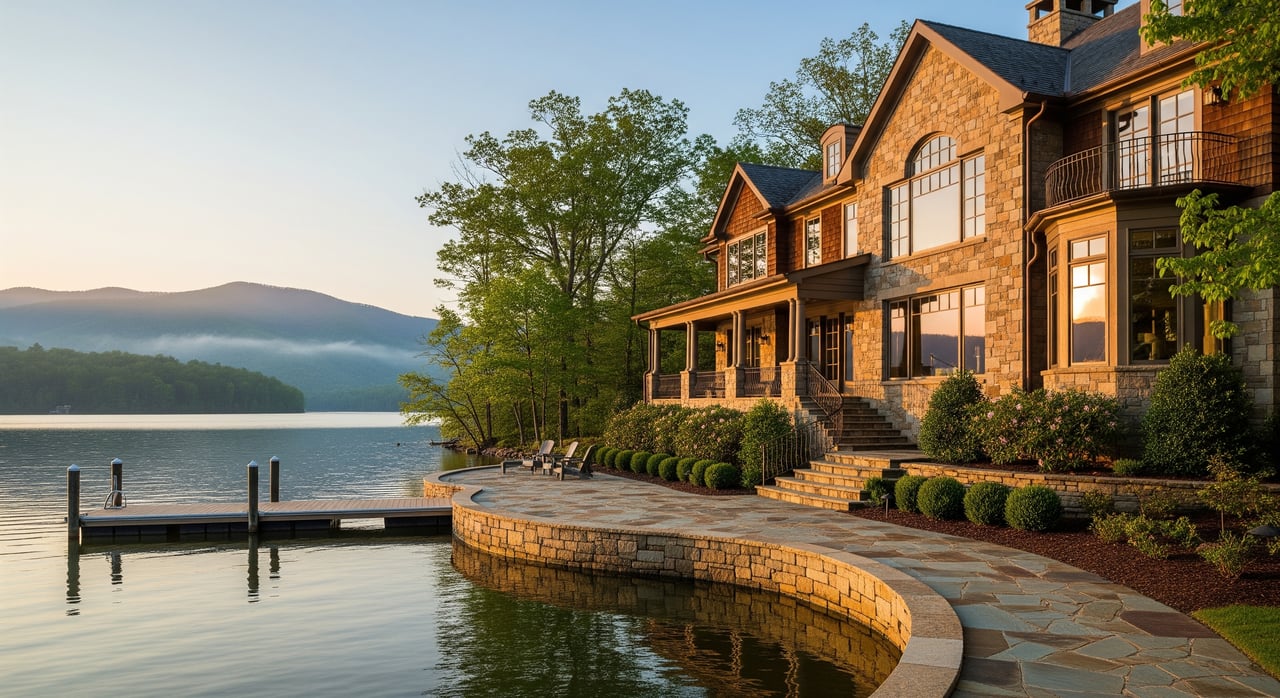
Are you eyeing a Biltmore Lake home that sits above the typical price range for Buncombe County? If the loan you need is larger than federal limits, you may be looking at a jumbo mortgage. That can change your rate, your paperwork, and the timeline you should plan for. In this guide, you will learn how jumbo loans work in Biltmore Lake, what lenders expect, and how to set up a stronger offer. Let’s dive in.
Jumbo loan basics in Biltmore Lake
A jumbo loan is any mortgage that exceeds the Federal Housing Finance Agency’s conforming loan limit for your county and property type. For 2024, the 1‑unit baseline limit is 766,550 dollars. If your loan amount is higher than that in Buncombe County, it is a jumbo. You can verify the current year’s limit with the FHFA conforming loan limit lookup tool.
Biltmore Lake includes amenity-rich homes that sometimes price above the conforming threshold. If the loan amount you need after your down payment is above the limit, you will use jumbo financing. That often means tighter underwriting, more documentation, and a slightly different process than a conforming conventional loan.
How to know if you need a jumbo
Use a simple check before you shop:
- Estimate your price range and down payment.
- Subtract your down payment from the price to find your target loan amount.
- Compare that loan amount to the FHFA limit for the year you will buy.
For 2024 examples:
- 1‑unit limit: 766,550 dollars
- 2‑unit: about 981,850 dollars
- 3‑unit: about 1,187,360 dollars
- 4‑unit: about 1,476,300 dollars
Limits update annually. Review the FHFA 2024 conforming loan limits and confirm the exact Buncombe County figure for your property type before you make an offer.
Key differences buyers should expect
Jumbo loans are underwritten by lenders without Fannie Mae or Freddie Mac backing. Here is what that means for you.
Interest rates. Jumbo rates often price slightly higher than conforming loans, though the gap changes with the market. Strong credit, healthy reserves, and a solid down payment can help you secure competitive pricing. See the CFPB overview of jumbo loans for context.
Down payment and LTV. Many jumbo programs ask for 10 to 20 percent down. Some lenders allow lower down payments for well-qualified borrowers, usually with added reserve requirements.
Credit score. Expect higher minimums than conforming loans. Many lenders look for 700 to 740 or better for best pricing.
Debt-to-income and reserves. Lenders often prefer a DTI near or below 43 to 45 percent. Most jumbos also require extra cash reserves after closing, commonly 6 to 12 months of full principal, interest, taxes, and insurance.
Mortgage insurance. Traditional PMI is less common on jumbos. You will usually pair a larger down payment with lender-specific structures instead.
Product variety. Banks, credit unions, and portfolio lenders offer different jumbo products. It pays to compare offers and underwriting styles. The Bankrate guide to jumbo loan requirements is a helpful overview.
Documentation checklist for stronger approval
Every lender sets its own rules, but most jumbo borrowers will need more complete and longer-dated paperwork. Start early so preapproval is smooth.
Income documentation:
- Two years of federal tax returns. Include business returns if self-employed.
- Two years of W‑2s, if employed.
- Recent pay stubs covering 30 to 60 days.
- For self-employed buyers: personal and business tax returns, profit and loss statements, and possibly bank-statement documentation if using a non-QM program.
- Signed authorization for tax transcript verification.
Assets and reserves:
- Three to twelve months of bank statements for liquid funds.
- Statements for investment and retirement accounts with notes on how funds can be liquidated.
- Gift letters and documentation, if using gift funds.
- Proof of post-closing reserves. Many jumbo programs require 6 to 12 months of PITI.
Credit and liabilities:
- Full credit report and letters of explanation for any derogatory items.
- Documents for other obligations like alimony or child support, if applicable.
Property and valuation:
- Full interior and exterior appraisal. Luxury or unique homes may require additional valuation steps.
- For homes with an HOA, lenders may request project documents to confirm budget health, reserves, and any special assessments.
If you want a head start, the CFPB mortgage documents checklist covers the basics that most lenders will ask for.
Biltmore Lake and Buncombe County factors
Buying in an amenity-rich community introduces a few local steps into the process. Plan for these items up front.
HOA dues and review. Lenders count HOA dues in your monthly obligations. Projects with special assessments or unusual budgets may need extra review, so get HOA documents to your lender early.
Appraisal complexity. Luxury and custom homes, lakefront lots, or properties with major upgrades can lack nearby comparable sales. Appraisers may need additional time, and some lenders may order a second review. Build a timeline that allows for this.
Taxes and insurance. County property taxes and insurance costs affect your overall monthly payment and reserve calculations. Some parcels may have specific flood or wildfire considerations. Ask for recent tax and insurance estimates when you start your preapproval.
Local lender relationships. Lenders who routinely close jumbos in Asheville and Buncombe County often move faster on HOA review, appraiser selection, and reserve sizing. Comparing two or three local options can reveal meaningful differences in terms and timelines.
Offer strategies that win in a jumbo market
When your loan is jumbo, your preparation can be the difference between an accepted offer and a missed opportunity. Use these steps to present strength.
For buyers:
- Secure a true jumbo preapproval. Ask your lender for a written price-range letter that cites your jumbo capacity and reserve verification.
- Share your lender’s contact. Encourage listing agents to call and confirm your file is fully underwritten.
- Front-load documentation. Deliver tax returns, bank and investment statements, and explanation letters during preapproval, not after you are under contract.
- Right-size the timeline. Set appraisal and financing contingency dates that reflect local appraisal turn times for unique homes.
- Provide HOA materials early. Offer to supply budgets, rules, and recent dues statements for lender review if available.
For sellers:
- Ask for strong preapproval. Request a jumbo-specific preapproval and direct contact with the lender to verify reserves and file status.
- Confirm timelines. Push for realistic appraisal and financing deadlines that match luxury valuation needs.
- Consider targeted concessions. If the buyer’s approval includes conditions, you can negotiate items like extended financing periods or credits to protect your net while keeping the deal intact.
Alternatives when a standard jumbo does not fit
If your profile or timeline is unique, there may be other paths to the closing table. These products come with different benefits and risks, so review them closely with your lender.
- Portfolio loans. Held by the originating bank, with more flexible underwriting for complex income or asset profiles.
- Bank-statement or non-QM programs. Useful for self-employed buyers with strong deposits but lower taxable income.
- Interest-only or ARM jumbos. Lower initial payments with payment changes later. Review the tradeoffs in the interest-only and ARM jumbo options overview.
- Bridge loans or HELOCs. Helpful if you are buying before selling and need access to equity.
Next steps and a simple action plan
If you think your Biltmore Lake purchase will require a jumbo loan, put a plan in place before you tour homes.
- Check the current Buncombe County limit with the FHFA conforming loan limit lookup tool.
- Speak with two or three lenders who routinely close jumbos in Buncombe County. Ask about down payment, reserves, and appraisal timelines.
- Assemble your documents and verify funds. Prepare two years of tax returns, pay stubs, bank and investment statements, and a signed transcript authorization.
- Run scenarios. Compare a few down payment and rate options so you understand monthly payments and reserve needs before you write an offer.
When you are ready to shop or sell in Biltmore Lake, you deserve a guide who knows the community and the expectations of jumbo lenders. For tailored advice and a private consultation, connect with Shaun Collyer.
FAQs
What makes a Biltmore Lake loan “jumbo” in 2024?
- Your loan amount is higher than the FHFA conforming limit for Buncombe County that year, which is 766,550 dollars for a 1‑unit home in 2024.
Do jumbo mortgages always have higher rates?
- Often they price slightly higher than conforming loans, but your credit, reserves, down payment, and lender selection can narrow the gap.
How much down payment do jumbo lenders require?
- Many programs ask for 10 to 20 percent down, with lower options possible for well-qualified buyers who also hold larger reserves.
What documents should I gather for a jumbo loan?
- Plan on two years of tax returns, W‑2s, recent pay stubs, 3 to 12 months of bank and investment statements, and explanations for large deposits.
Will HOA rules in Biltmore Lake affect my jumbo approval?
- Lenders review HOA budgets, reserves, and any special assessments, so it is smart to provide project documents early for a smoother review.